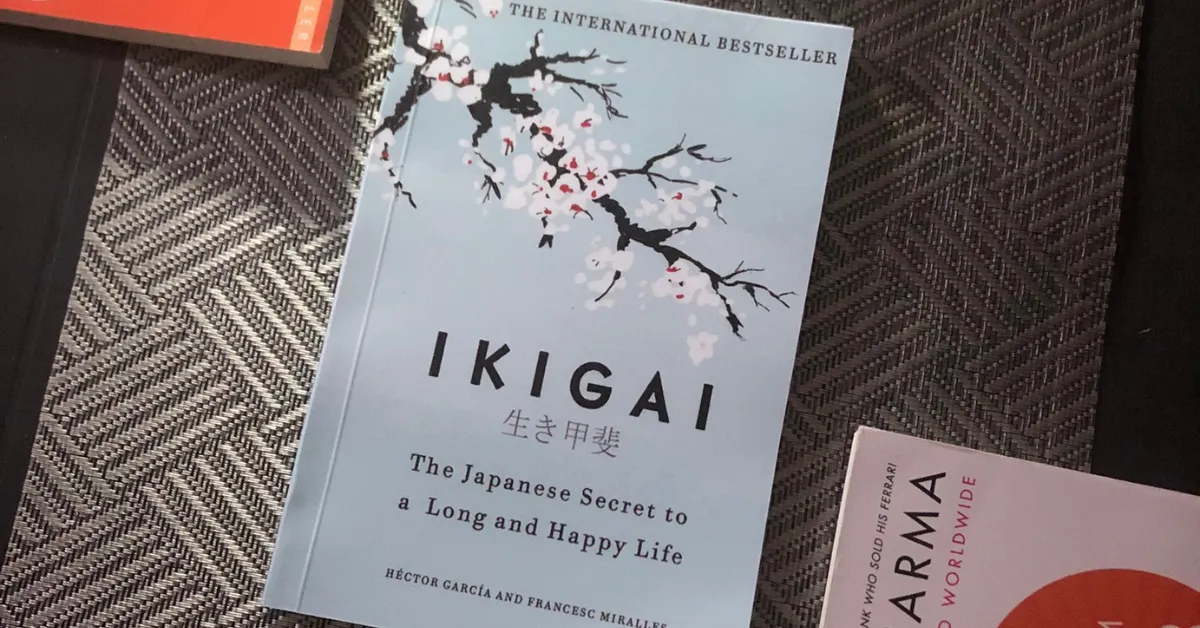
Ikigai - The Japanese Secret To A Long And Happy Life
Some books do not hit you with fireworks.
They settle in quietly and start rearranging the way you think.
That is what Ikigai feels like to me.
At its core, ikigai is a Japanese concept that means something like a reason for being. A source of value, joy, and meaning in life. It is broader than the way we usually talk about “purpose”. It is not just your career, your calling, or your next big thing. It can live in your work, your relationships, your routines, and even the small things that make life feel worth waking up for.
And honestly, that idea lands very differently when you are building a life that carries a lot.
Business. Motherhood. Healing. Rebuilding. Creating. Showing up again and again.
At some point, purpose stops being a cute inspirational word and becomes a serious question.. What actually gives my life value?
That is why Ikigai makes so much sense to me.
The book is famously connected to Okinawa, one of the world’s Blue Zones, where people are known for longevity and strong community bonds. The authors explore how people there live. How they eat, move, work, stay socially connected, and keep a sense of meaning in daily life. The point is not just that they live long lives. It is that they live lives that stay engaged, useful, and connected.
That part matters.
Because so many of us have been taught to chase a purpose that looks impressive from the outside. The big title. The clear mission statement. The “I found my calling” moment.
But Ikigai seems to suggest something softer, more sustainable, and honestly more human than that.
Purpose is not always loud.
Sometimes it is the work you still care about on tired days.
Sometimes it is the people you keep showing up for.
Sometimes it is the routine that keeps you grounded when life feels chaotic.
Sometimes it is simply knowing that your life still has a pulse of meaning in it.
That is the part I would carry into my own life as a founder and marketer.
I do my best work when I am not just chasing output. I do it when the work feels aligned, useful, and rooted in something deeper than metrics. Because let’s be real.. growth without meaning gets exhausting fast. And meaning without action stays a pretty idea on a page.
What I like about Ikigai is that it does not ask you to become someone else. It asks you to notice what already gives your life value, and then build around that with intention. That feels especially relevant in seasons where you are balancing so much that you can forget what actually keeps you steady.
So yes, this book feels important to me, not because it is trying to hype me up, but because it is asking better questions.
Not, “What should I do with my life?”
But, “What makes my life worth living, and how do I protect that?”
That is a question worth sitting with.
And maybe that is the real gift of Ikigai.
It reminds you that purpose is not a performance.
It is a practice.
