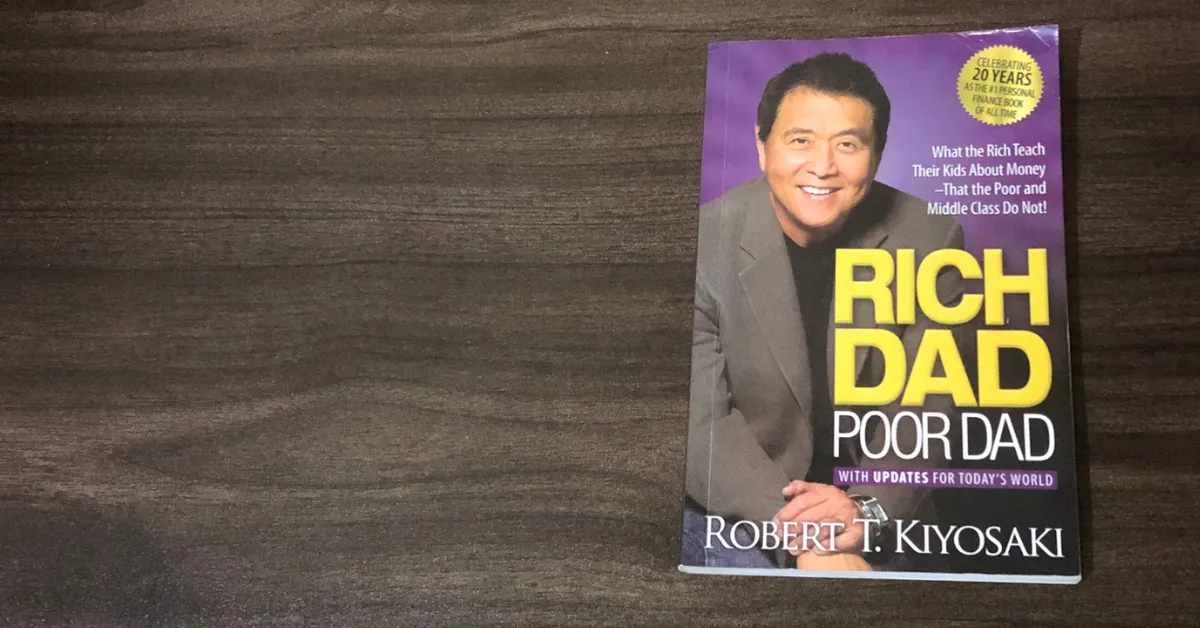
Rich Dad Poor Dad - What The Rich Teach Their Kids
Let’s start the year with the book that started everything for me.
Before the funnels.
Before the branding frameworks.
Before I ever called myself a business owner.
This was the first book that cracked my mindset wide open about money, business, and wealth.
And honestly? I didn’t even know I needed that crack yet.
Why This Book Hit Different
When I first read Rich Dad Poor Dad by Robert Kiyosaki, I wasn’t looking for a finance book.
I wasn’t trying to “build wealth.”
I wasn’t thinking about assets, investing, or financial independence.
I was just doing what most of us were taught to do.
Go to school
Get good grades
Get a stable job
Save money
Work hard and hope it all works out
This book was the first one that gently, but firmly said..
“What if that entire script is incomplete?”
Not wrong.
Just… limited.
And once that question lands, you can’t unsee it.
It’s Not About Money. It’s About Mindset.
Despite the title, Rich Dad Poor Dad isn’t really about getting rich fast.
It’s about how you think about money.
Kiyosaki contrasts two mindsets:
One that prioritizes security, steady paychecks, and playing it safe
And one that prioritizes learning, leverage, and long-term freedom
The biggest lesson?
We’re taught to work for money but rarely taught how to make money work for us.
That one idea alone changes everything.
Lessons That Still Stick With Me And Shape How I Build Today
1. A Wake-Up Call About Assets vs. Liabilities
An asset puts money in your pocket.
A liability takes money out of it.
Sounds simple, right?
But most people are taught the opposite.
We’re told a big house is an asset.
That a new car is a sign of success.
That upgrading your lifestyle means you’re “winning.”
This book forced me to look at money without emotion attached.
Not:
“Does this make me look successful?”
But:
“Does this help me build freedom?”
That distinction still guides how I think about business investments today.
2. Your Job Is Not the Goal, It’s a Tool
This part is uncomfortable for a lot of people.
Kiyosaki doesn’t shame having a job but he challenges the idea that a paycheck alone will ever create true security.
Because here’s the truth:
A job gives income
But assets give options
And options are what create freedom.
This shifted how I looked at work entirely.
Not as the end goal, but as a means to fund learning, investing, and growth.
3. Financial Literacy Is a Skill And It’s Learnable
One thing I appreciated about this book is that it doesn’t paint wealth as luck or privilege alone.
It emphasizes:
Learning how money moves
Understanding basic investing concepts
Becoming comfortable with numbers instead of avoiding them
And most importantly?
You don’t need to be perfect you just need to be curious and willing to learn.
That mindset alone applies far beyond money.
It’s the same mindset that builds businesses.
4. Fear and Comfort Are Expensive
This lesson aged like fine wine for me.
The book repeatedly points out how fear of failure, fear of looking stupid, or fear of losing money keeps people stuck.
And if I’m being honest?
I see this exact pattern with business owners today:
Afraid to invest
Afraid to pivot
Afraid to bet on themselves
But growth, whether financial or entrepreneurial, always requires calculated discomfort.
That lesson alone has paid dividends in my career.
My Realization Reading It As a Founder
Reading Rich Dad Poor Dad felt different.
It didn’t feel revolutionary.
It felt foundational.
Because so much of how I operate today..
building assets through businesses,
thinking long-term,
valuing education over credentials,
prioritizing ownership over optics,
was quietly shaped by this book before I even realized it.
It reminded me that.
The way you think about money determines the way you build your life.
And that’s not just finance.
That’s philosophy.
Why This Book Should Belong on Your Shelf
Is it perfect? No.
Is it sometimes repetitive? Yes.
Does everyone interpret it the same way? Definitely not.
But it does one powerful thing extremely well.
It makes you question the default.
And once you start questioning:
how you earn,
how you save,
how you invest,
and why you work the way you do…
You’re already ahead of where you were yesterday.
A Thought I’ll Leave You With
If your income stopped tomorrow,
how long would your lifestyle survive?
And more importantly..
What are you building today that will still work for you tomorrow?
That question changed my trajectory.
Maybe it’s time it nudged yours too.
